
01
Cut
The most critical factor. Cut determines how brilliantly a diamond reflects light.


A diamond certificate — also referred to as a diamond grading report — is an official document issued by an independent, accredited gemological laboratory. It provides a thorough, unbiased evaluation of a diamond's quality and characteristics, giving buyers the confidence and clarity they deserve before making such a meaningful investment.
The assessment examines a diamond across four key criteria, universally known as the 4Cs: cut, colour, clarity, and carat weight. Together, these factors determine a diamond's overall beauty, rarity, and market value.
At Bond Jewellery & Diamonds, we believe an informed customer is an empowered customer. Whether you are selecting a diamond engagement ring or a timeless piece of fine jewellery, understanding certification helps you choose with confidence.
Diamond certification exists to protect you. Without an independent grading report, there is no standardised way to verify what you are purchasing. A certificate ensures that a diamond's qualities have been assessed by experts who have no commercial interest in the outcome.
Certification also plays a crucial role in transparency. It allows you to compare diamonds on equal terms and confirms that the stone you choose truly reflects the price you are paying.
It is worth noting that a grading report is not the same as a warranty or a guarantee of price — it is simply an expert, objective assessment of a diamond's characteristics at the time of grading.

A standard diamond grading report is comprehensive and detailed. Here is what you can typically expect to find:
Every diamond is assigned a unique identification number. This number is often laser-inscribed on the diamond's girdle (the outer edge) and can be used to verify the certificate online through the issuing laboratory.
The report records the diamond's shape (such as round brilliant, princess, or oval) alongside its precise physical dimensions in millimetres, providing a clear picture of the stone's profile and proportions.
The precise weight of the diamond is recorded to five decimal places. One carat is equal to 0.2 grams. Carat weight is a key factor in value, but should always be considered alongside the other 4Cs.
The diamond's colour is graded on a scale from D (completely colourless) to Z (light yellow or brown). Diamonds graded D–F are considered exceptional. The grading is performed under controlled lighting to eliminate subjectivity.
Clarity measures the presence of internal inclusions and external blemishes. The GIA clarity scale has 11 grades, from Flawless (FL) to Included (I3). A plotting diagram within the report maps any characteristics unique to that stone. .
For round brilliant diamonds, cut is graded from Excellent to Poor, based on proportions, symmetry, and polish. A diamond's cut is arguably its most important quality — it determines how brilliantly the stone interacts with light.
These two grades assess the smoothness of the diamond's facets (polish) and the precision of its overall form (symmetry). Both are graded from Excellent to Poor and contribute to the diamond's overall brilliance.
This describes how the diamond reacts under ultraviolet light. Fluorescence is graded from None to Very Strong, and its effect on a diamond's appearance and value can vary depending on the stone's other characteristics.
Not all certification bodies operate to the same standard. When purchasing a diamond, the reputation of the issuing laboratory matters greatly. Below are the most respected grading institutions worldwide.

Founded in 1931, the GIA is widely regarded as the world's foremost authority in diamond grading. A non-profit organisation, the GIA developed the globally adopted 4Cs framework and the diamond colour grading scale still used today. Its grading reports are known for their consistency, accuracy, and rigorous standards.
Among its most coveted grades is the Triple Excellent — awarded to diamonds that achieve Excellent ratings in cut, symmetry, and polish simultaneously. A GIA Triple Ex diamond represents the finest balance of light performance and craftsmanship.

Established in 1975 and headquartered in Antwerp, the IGI is one of the largest independent gem certification bodies in the world. It is particularly well known for grading both natural and laboratory-grown diamonds, making it a popular choice for modern buyers exploring lab-grown alternatives.
The IGI operates laboratories across major diamond markets, including London, New York, Mumbai, and Hong Kong, providing globally accessible certification services.
You may encounter both terms — "diamond certificate" and "diamond grading report" — used interchangeably. In most day-to-day contexts, they refer to the same document. However, many industry professionals favour the term grading report, as it more accurately conveys the document's purpose.
The word "certificate" can mistakenly suggest a guarantee or warranty, which is not what the document provides. A grading report is precisely that: an expert assessment of a diamond's properties at a specific point in time. It does not promise that the diamond will hold a certain value or that its appearance will never change.
The 4Cs are the universal language of diamond quality. Developed by the GIA, they provide a standardised and objective way to assess any diamond, regardless of size, shape, or origin.
01
The most critical factor. Cut determines how brilliantly a diamond reflects light.

02
Graded D–Z, colour measures the absence of yellow tints in a white diamond.

03
Refers to the presence (or absence) of natural inclusions within the stone.

04
Carat measures a diamond's weight — and is often the starting point for budget planning.
Of all the 4Cs, cut has the greatest influence on a diamond's brilliance and visual impact. A well-cut diamond will reflect light beautifully — producing that unmistakeable sparkle. Cut grades range from Excellent to Poor, and even a diamond with outstanding colour and clarity can appear dull if poorly cut.
The ideal cut — often associated with round brilliant diamonds — features 58 precisely angled facets designed to maximise the return of light to the eye. The symmetry and proportions of these facets are everything.
The GIA colour scale for white diamonds spans from D to Z. A grade of D represents a completely colourless diamond — the rarest and most desirable in the white diamond category. As the scale progresses towards Z, increasingly visible hints of yellow or brown become apparent.
Diamonds graded D through F are considered colourless, while G through J fall in the near-colourless range. For those seeking maximum brilliance, a diamond in the D–G range is an exceptional choice. Beyond Z, coloured or "fancy" diamonds are graded on an entirely different scale — from Faint to Fancy Vivid.
Clarity refers to the presence — or absence — of internal characteristics (inclusions) and surface imperfections (blemishes) within a diamond. These natural features form during a diamond's creation deep within the earth and are entirely unique to each stone, much like a fingerprint.
The GIA clarity scale features 11 grades across six categories, from Flawless (FL) — in which no inclusions or blemishes are visible even under 10× magnification — down to Included (I3). Diamonds graded VS1, VS2 (Very Slightly Included) or higher are considered excellent choices, with any characteristics invisible to the naked eye.
Carat is the unit of measurement used to express a diamond's weight. One carat equals 0.2 grams, and each carat is subdivided into 100 points for precise measurement. While carat weight is often the first quality buyers consider, it is important to remember that a larger diamond is not necessarily more beautiful than a smaller one.
The true beauty of a diamond lies in the harmony of all four characteristics. A one-carat diamond with exceptional cut, colour, and clarity will often outshine a two-carat stone of lesser quality.
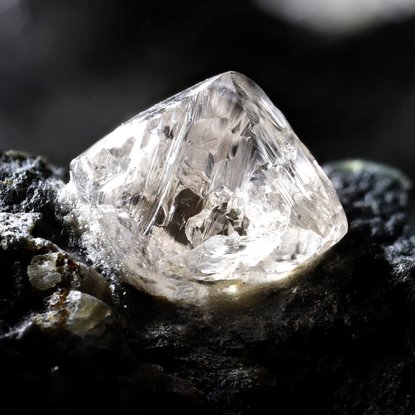
Diamond certification goes beyond quality — it also plays an important role in the ethical sourcing of diamonds. A certified diamond from a reputable laboratory provides a traceable paper trail, offering reassurance that the stone has been assessed independently and responsibly handled throughout its journey.
At Bond Jewellery & Diamonds, we are committed to sourcing diamonds in accordance with the Kimberley Process — an international certification scheme that works to prevent conflict diamonds from entering the global supply chain. Every diamond we offer is ethically sourced and conflict-free.
When you purchase a certified diamond from us, you can be confident not only in its quality and beauty, but in the integrity of its origins.
The GIA (Gemological Institute of America) is broadly regarded as the most respected and rigorous certification body in the world. Its grading standards are highly consistent and its reports are recognised by jewellers and buyers globally.
The GIA Triple Excellent (Triple Ex) grade is awarded to round brilliant diamonds that receive an Excellent rating in cut, symmetry, and polish. It represents the highest standard of craftsmanship and light performance available.
In practice, yes — the terms are used interchangeably by most buyers and retailers. However, industry professionals often prefer "grading report" as it more accurately reflects the document's purpose: an objective assessment, not a guarantee of value or condition.
Yes. Most major laboratories, including the GIA and IGI, allow you to verify a diamond's grading report online using the unique report number found on the certificate — or inscribed on the diamond's girdle. This provides an additional layer of authenticity and security.
We strongly recommend purchasing certified diamonds, particularly for significant investments such as engagement rings. Certification ensures transparency, protects you from overpaying, and gives you an objective understanding of exactly what you are buying. At Bond Jewellery & Diamonds, all our diamonds are accompanied by documentation from recognised laboratories.